Drainage Solutions
Drainage Solutions in Orange County, NY
Grading, drains, and runoff management that move water away from your foundation instead of into it.
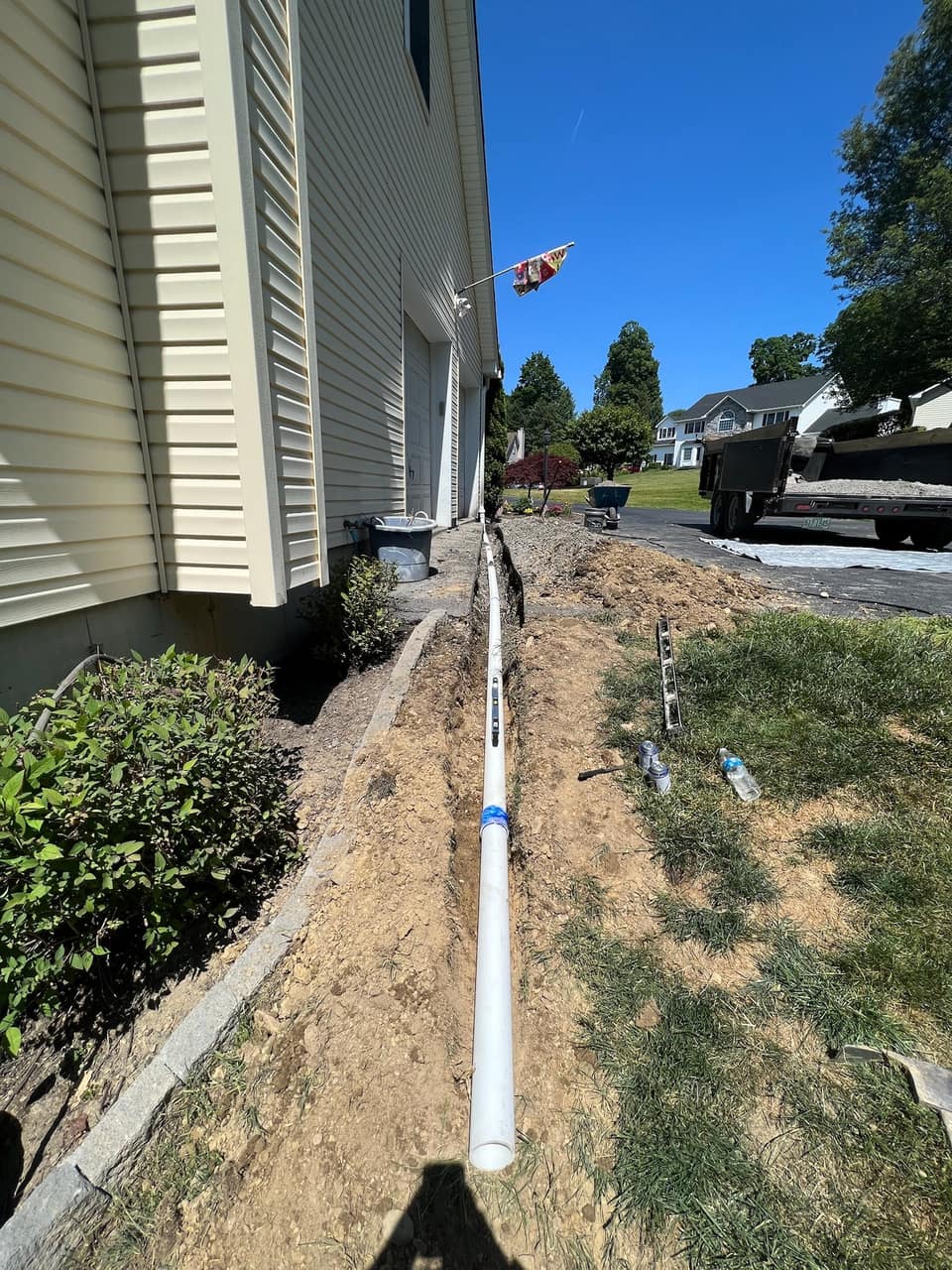


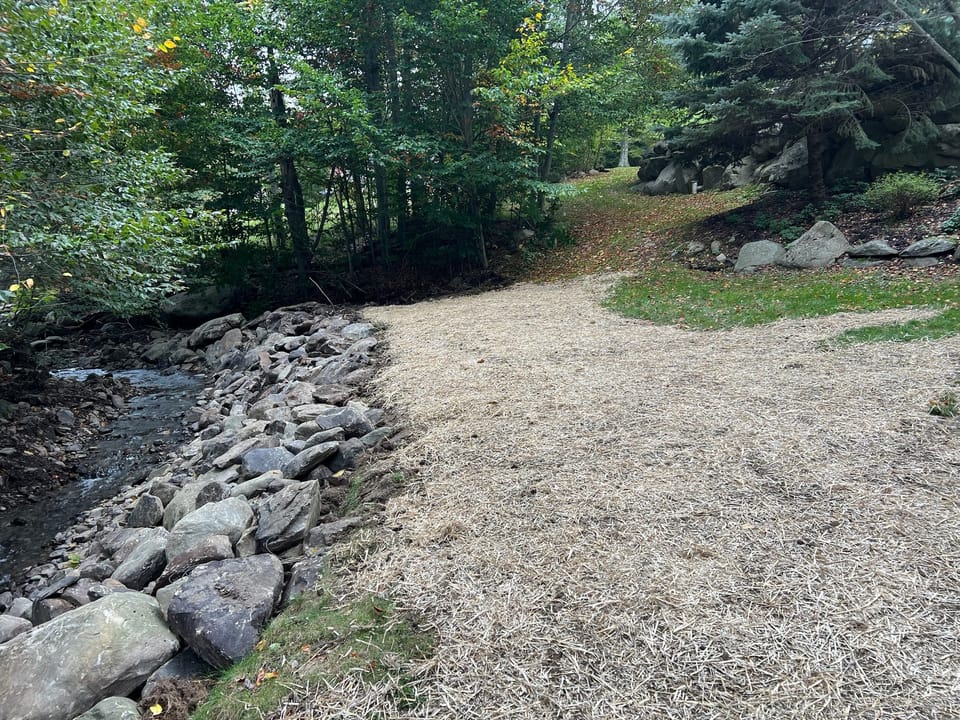
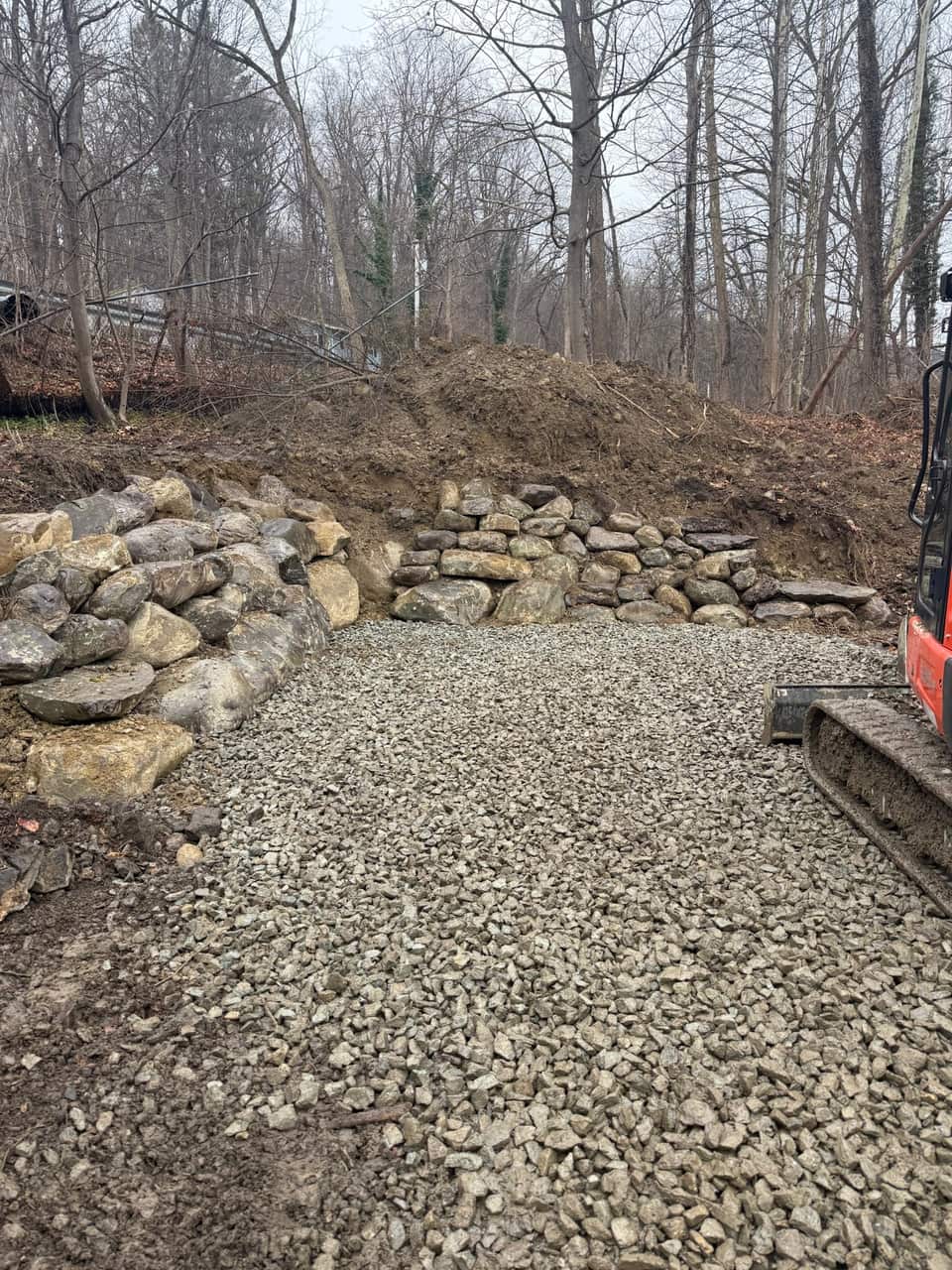
Water is the thing that breaks everything else
Almost every expensive outdoor problem in the Hudson Valley starts as a water problem. Retaining walls lean because water sat behind them. Patios heave because water froze under them. Basements leak because water had nowhere to go but toward the house. Lawns die in patches because water sits instead of draining.
Fixing the water is usually cheaper than repeatedly fixing what the water damages.
What we do
- Grading and regrading: correcting slope so water moves away from structures instead of toward them
- French drains: intercepting subsurface water before it reaches your foundation
- Surface and catch-basin drains: for standing water in low spots, patios, and driveways
- Downspout and roof runoff management: piping roof water away from the foundation rather than discharging it at the corner of the house
- Swales and drainage channels: shaping the land to carry volume during heavy rain
French drain installation
A French drain is a perforated pipe surrounded by clean stone, buried at a depth and pitch that lets it intercept water moving through the soil and carry it somewhere else by gravity. It handles subsurface water: water in the ground, not water sitting on the surface.
That distinction matters, because installing the wrong drain type is the most common way homeowners spend money and still have a wet basement.
Where French drains work well in Orange County
Properties on slopes, which is most of Cornwall, Highland Falls, and Monroe, frequently have water arriving from uphill during a storm. A French drain uphill of the foundation intercepts it before it reaches the wall.
Properties at the bottom of a grade, or with heavy clay-ish soil that holds water, often need one along the foundation combined with regrading.
How we install a French drain
- Diagnose first: we look at where water is actually coming from before proposing where the drain goes
- Excavate to a depth that intercepts the water, not just a trench
- Filter fabric and clean stone, so soil doesn’t silt the pipe closed in five years
- Consistent pitch to a real outlet: daylight, dry well, or pump
- Restore the surface: topsoil and seed, not bare trench
Why French drains fail
French drains that stop working usually either silt up because they were installed without proper fabric and stone, or never worked because there was no genuine outlet and the water had nowhere to go. Both are avoidable, and both are why we’d rather look at the property before quoting.
Why this matters more here
Hudson Valley soil holds water. A lot of Orange County properties sit on grade with water arriving from uphill during a storm, and a lot of older homes were built before anyone thought hard about roof runoff. That combination produces the wet-basement calls we get every spring.
One of our customers came to us after torrential rain was getting into the basement. The fix was foundation, yard, and sidewalk work outside, with no interior waterproofing needed.
Start with a diagnosis
We’d rather figure out where the water is actually coming from than sell you a drain that moves the problem ten feet. Free assessment: we’ll walk it and tell you what we see, including if the answer is “this is simpler than you think.”
Commercial and municipal drainage
The same water-management approach applies at commercial scale. See commercial hardscaping for permeable paver systems, ADA-compliant access, and site drainage on commercial and municipal properties.
Request a free quote
Tell us about the project. We'll be in touch to set up a time to look at it.
Thanks, we've got it.
We'll be in touch to set up a time to look at the project.
Need us sooner? Call (845) 325-2824 directly.
Something went wrong on our end. Please call (845) 325-2824 and we'll get right back to you. Your info above is still here, you don't need to retype it.
Drainage Solutions questions we get
My basement leaks during heavy rain. Is that a drainage problem?
Very often, yes, and homeowners usually try to solve it from the inside first. If water is arriving because the grade slopes toward the house, downspouts dump at the foundation, or there's nowhere for runoff to go, sealing the inside treats the symptom. We've fixed basement water problems entirely from outside more than once.
What's the difference between a French drain and a surface drain?
A surface drain catches water sitting on top, like a low spot in the lawn or a puddling patio. A French drain is a perforated pipe in gravel underground that intercepts water moving through the soil. Different problems, and using the wrong one just relocates the water.
How do I know where the water is actually coming from?
That's the first question and it's worth answering before spending money. We walk the property, look at grade, downspouts, roof runoff, and what's uphill of you. Sometimes the fix is much smaller than expected. Sometimes the source is a neighbor's property, which changes the approach entirely.
Will regrading damage my existing lawn and beds?
Regrading disturbs the area being worked, yes. We restore it, topsoil, seed or sod, as part of the job rather than leaving you with bare dirt.
How deep does a French drain need to be?
It depends on what you're intercepting. A drain protecting a foundation generally needs to sit below the water path reaching the wall, which is deeper than one catching surface saturation in a lawn. Too shallow is the most common reason a French drain underperforms.
Where does the water from a French drain actually go?
Somewhere lower, by gravity: daylighting on a slope, into a dry well, or to a suitable discharge point. Finding that outlet is the part that determines whether the drain works. On flat lots it sometimes requires a pump, and we'll tell you up front if that's your situation.
How long does French drain installation take?
Most residential French drains are one to three days depending on length, depth, and access. Rocky ground, common closer to the Highlands, can extend that.
Will a French drain fix my wet basement?
If the water is arriving through the soil against your foundation, usually yes. If it's coming from a crack, a failed sump, or roof runoff dumped at the corner of the house, a French drain isn't the right fix. Worth diagnosing before digging.
Drainage Solutions by town
What our customers say
"We just had work done by Krafft's Lawn and Landscape. It was a fairly big job, and we were thrilled with the results. When we called, Ryan came out within 24 hours and did a thorough inspection of the site. He listened intently to what we wanted to do and actually heard us. He then gave us a quote for exactly what we needed, at a very fair price. The work they did was thorough and exact, and when they were done, the clean-up was the best we've ever had. They treated our yard like it was their own. Overall, a perfect job, a fair price, with responsive and honest people. They'll be our first choice when we need more work done."
"What a great experience all around!! We had a ~100 ft run of not-so-easy-to-replace fence to replace, rocky space, thru a tree, and dodging limby shrubs, with elevation change. They took care of the permitting for us! and they did a super clean demo and haul away. Setting the new fencing was truly impressive to watch, they took great pains to make sure each section was square, plumb, and level. Really nice work! We love it! We will never hesitate to work with Ryan & Co. again!! Highly recommended!"
"Ryan and the Krafft team did structural and landscaping work for us to mitigate leaking into our basement from torrential rains. The foundation, yard, and sidewalk work they did was top-notch. Bottom line: great work, great price, and great people. They are trustworthy and I'll work with them again for our next project."